
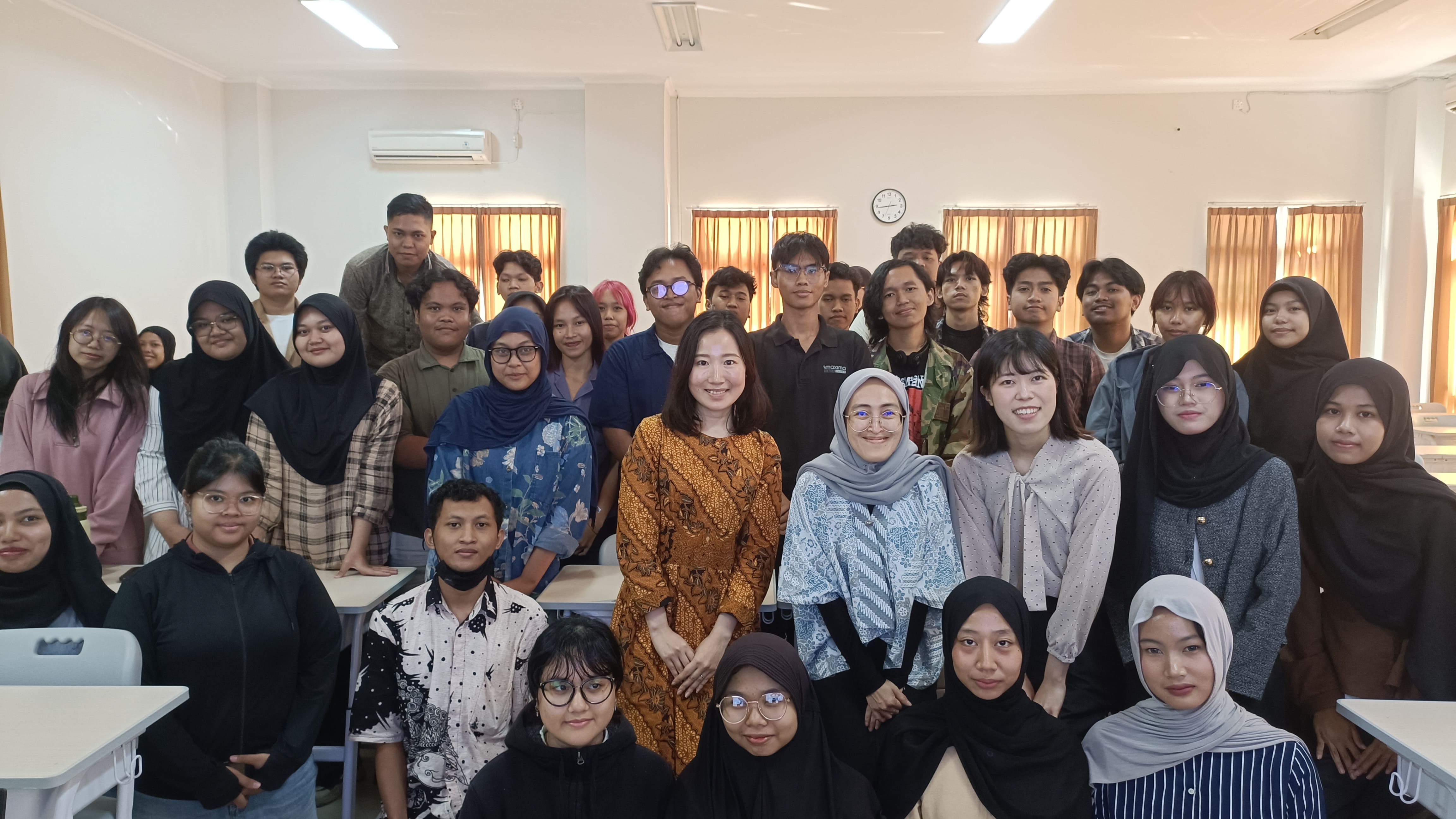
The Japanese Language and Culture Study Program at Diponegoro University held a hybrid guest lecture entitled “Rethinking Hijab Cosplay and the Locus of Muslim Women’s Agency” on May 25, 2026, as part of the UNDIP Global Classroom (UGC) program. The lecture featured Ayumi Inouchi, Ph.D. from Arizona State University as the speaker, who discussed the phenomenon of hijab cosplay from popular culture and socio-cultural perspectives.
In the presentation session, the speaker explained that hijab cosplay refers to the practice in which Muslim women cosplay fictional characters while continuing to wear the hijab in accordance with Islamic modesty values. This phenomenon has grown significant especially in Indonesia and Malaysia since 2010s alongside the increasing popularity of fandom and cosplay culture in Southeast Asia. The lecture highlighted how hijab cosplay is often narrowly perceived either as a symbol of limitation or as a form of resistance against social norms. In this context, Muslim women are understood as active subjects who are freely to negotiate their own identity, religiosity, and personal enjoyment through cosplay practices.
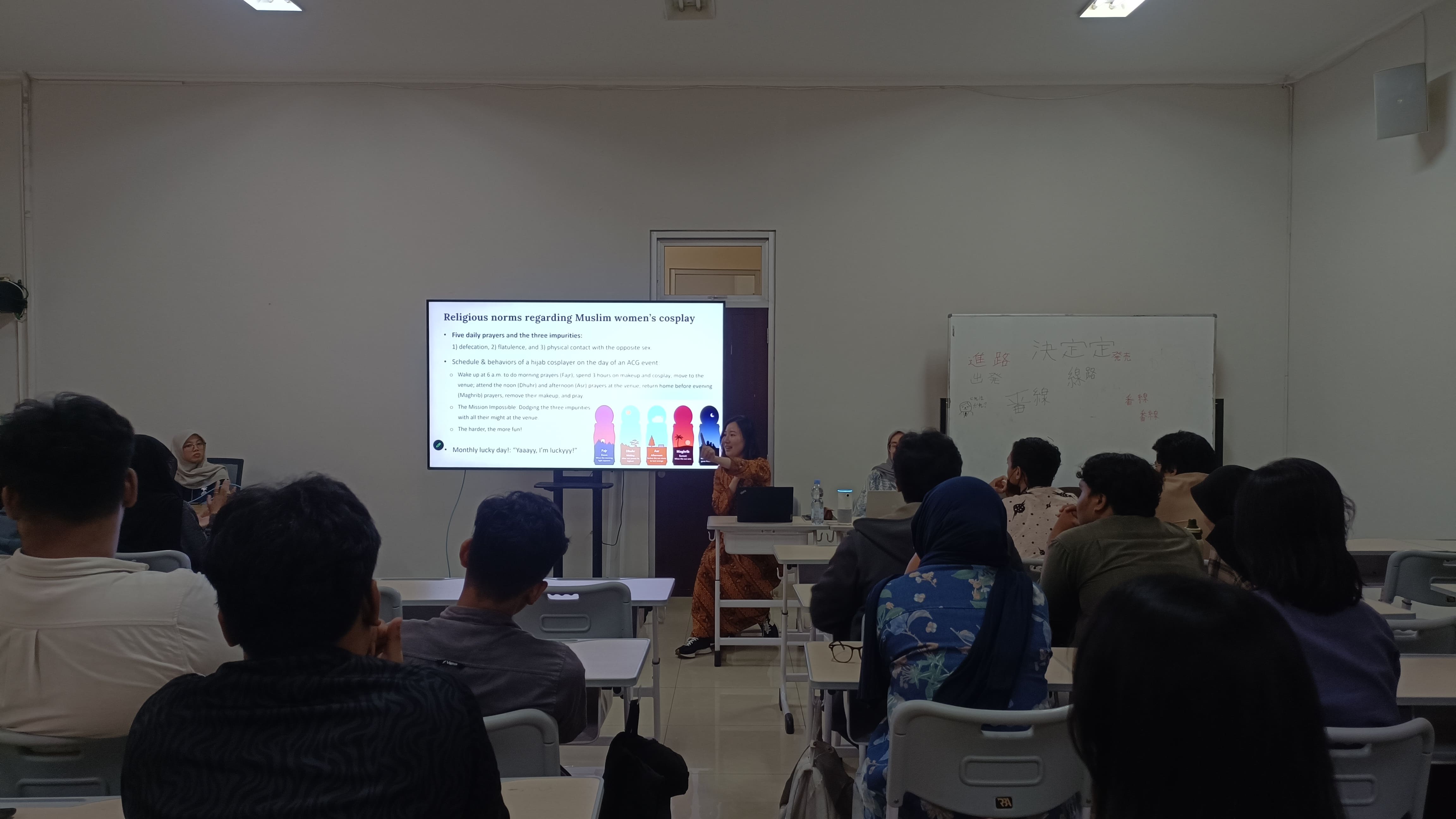
The lecture also emphasized that pleasure and play are important aspects of fandom culture. Cosplay is not merely entertainment, but also a space for self-expression that operates within its own rules and boundaries. Through this practice, hijab cosplayers creatively balance their religious values while actively participating in the popular culture they enjoy.
The research presented in the lecture was conducted in Kuala Lumpur since 2024. The study focused on hijab cosplayers first hand experiences, including how they maintain religious practices and obligations while keep participating in cosplay events and fandom activities.
The speaker further explained that, for some Muslim women, wearing the hijab can provide a sense of comfort and protection from the sexualization often experienced by female cosplayers. This condition encourages creativity in modifying character costumes so they remain aligned with the principles of Muslim dress without compromising the aesthetic appeal of cosplay itself.
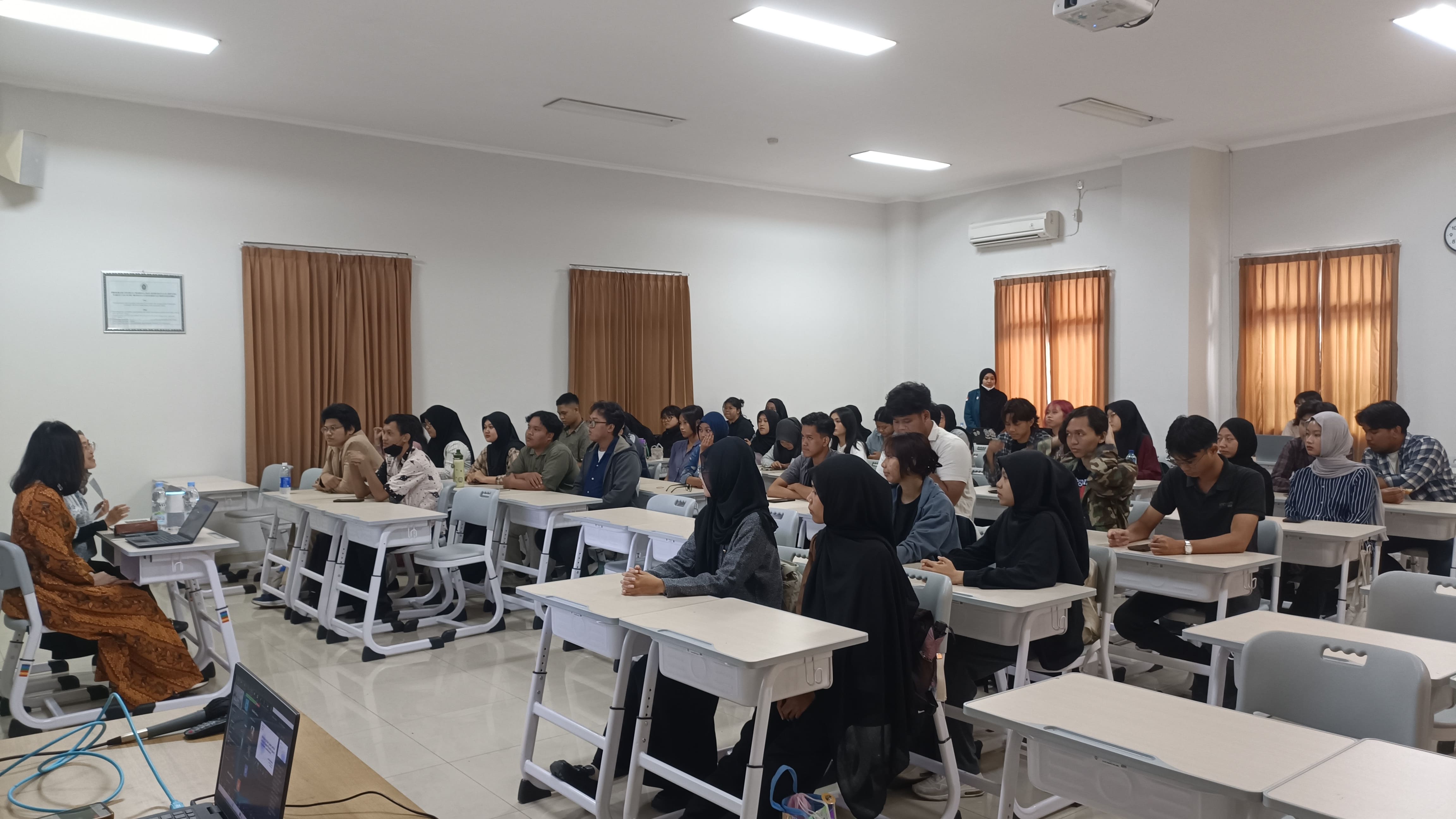
Through this lecture, students are encouraged to develop a more critical and multidisciplinary understanding of Japanese popular culture and the fandom phenomenon, particularly in relation to issues of identity, gender, and religiosity in Southeast Asian societies. The discussion session was conducted enthusiastically, with participants actively engaging through various questions and reflections regarding the dynamics of Muslim cosplay culture in modern society.
This lecture also reflects Diponegoro University’s commitment to strengthening international academic collaboration and supporting the university’s World Class University (WCU) program through global learning initiatives and cross-cultural academic exchange.