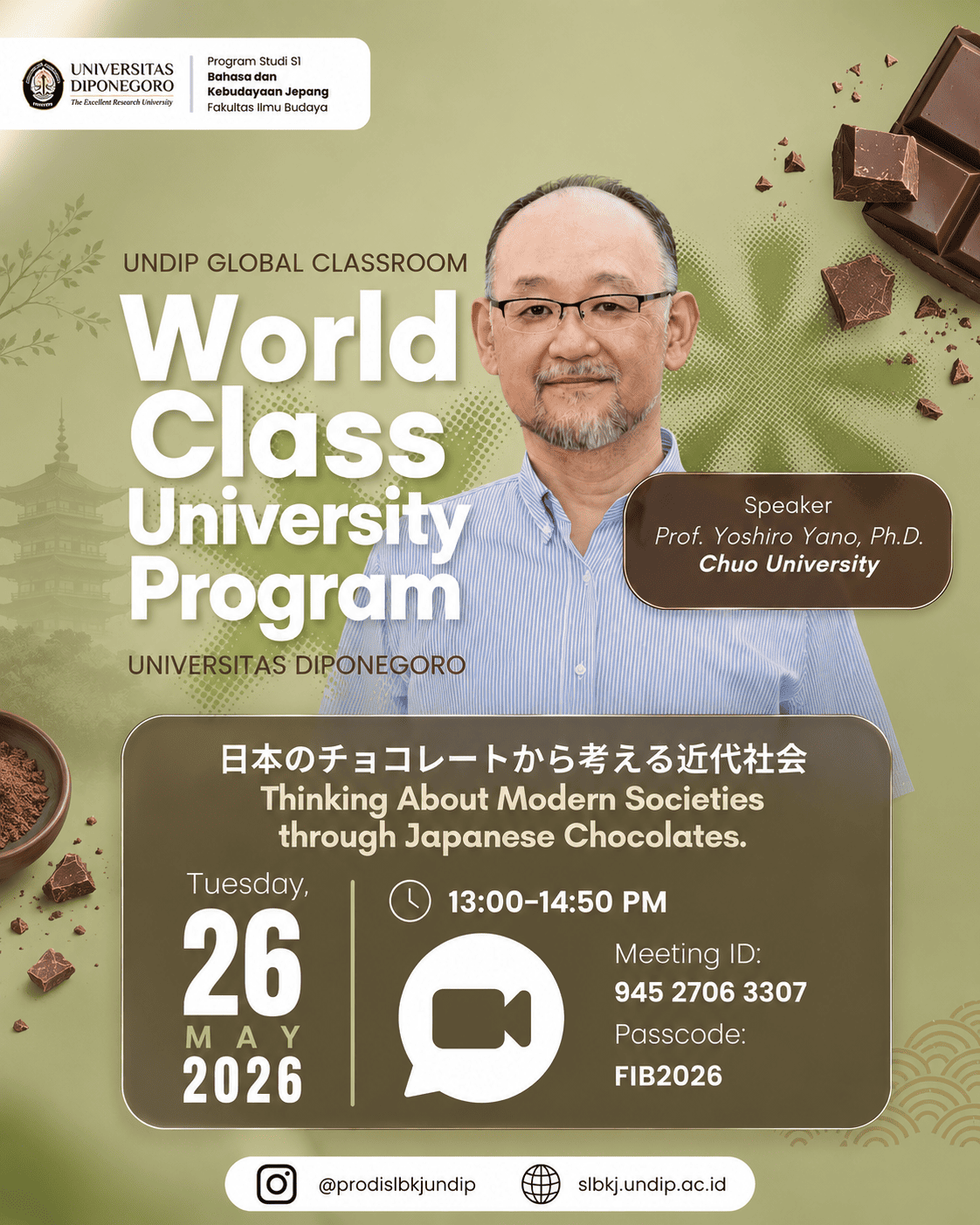
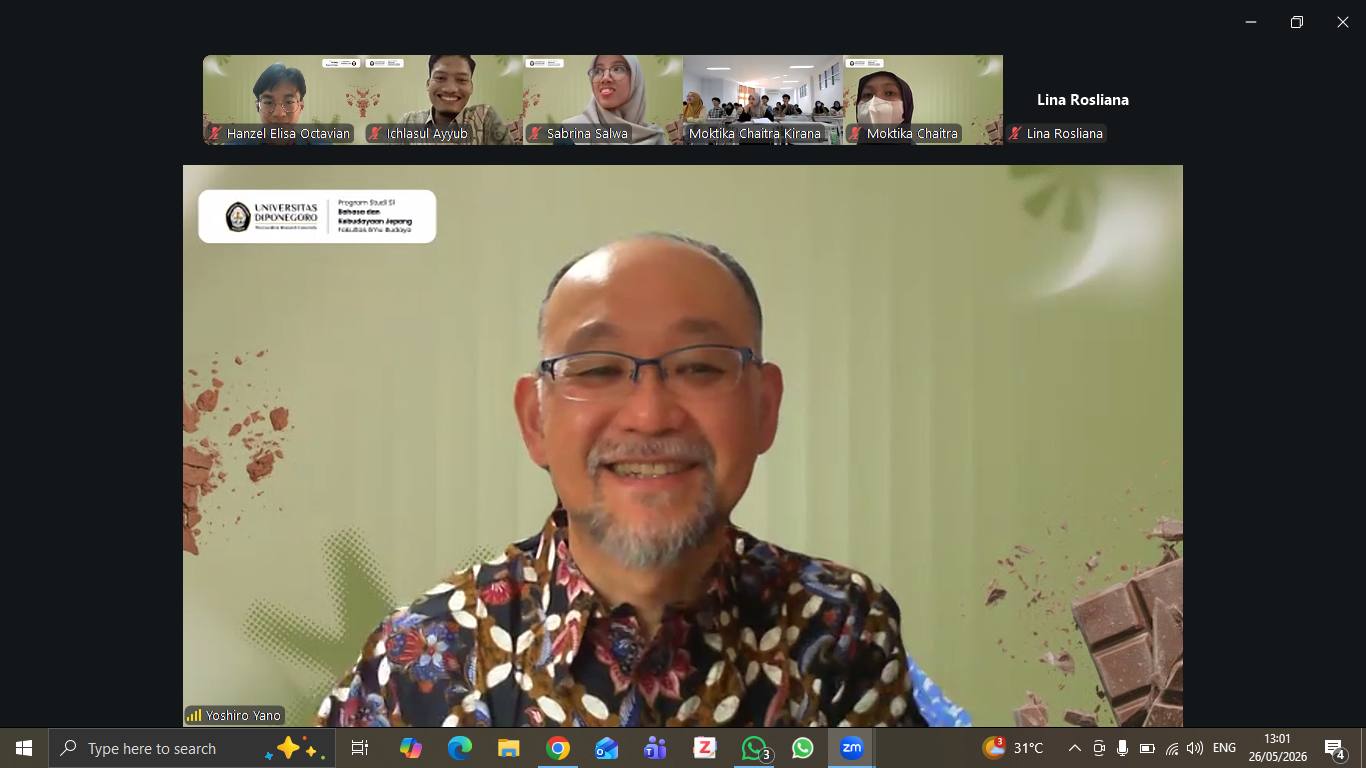
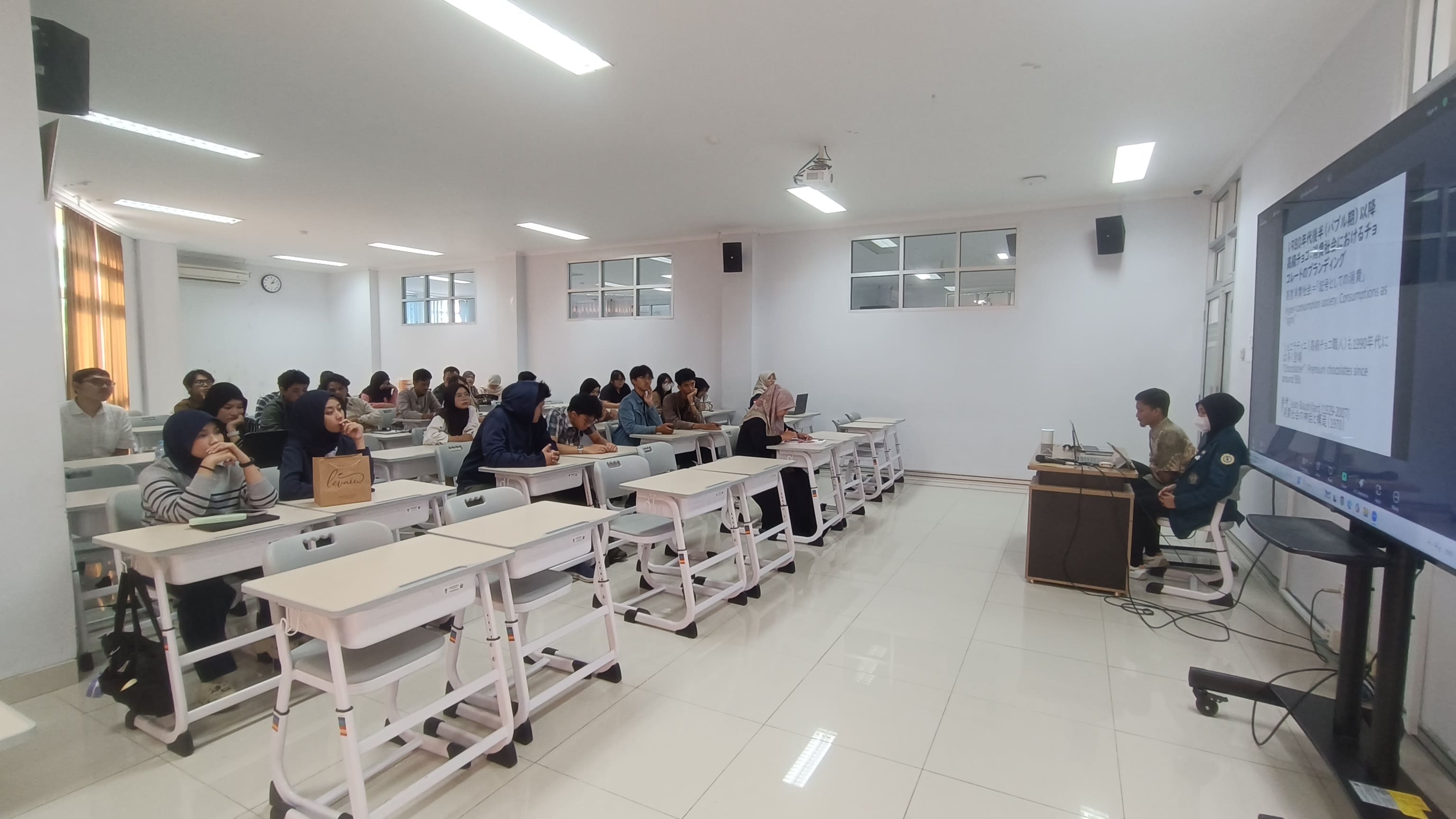
The Undergraduate Program of Japanese Language and Culture, Faculty of Humanities, Universitas Diponegoro (UNDIP), successfully organized an international guest lecture through the UNDIP Global Classroom (UGC) program on May 26, 2026. Conducted in a hybrid format, the event featured Prof. Yano Yoshiro, Ph.D., Professor of Sociology at Chuo University, Japan, who delivered a lecture entitled “Thinking About Modern Societies Through Japanese Chocolates.”
The lecture provided students with a unique interdisciplinary perspective on modern Japanese society by examining the history, development, and global implications of the chocolate industry. Through this seemingly familiar commodity, participants were invited to explore broader issues related to industrialization, capitalism, religion, imperialism, consumer culture, and sustainability.
In the first part of the lecture, Prof. Yano introduced the development of Japan’s chocolate industry through major confectionery companies such as Meiji, Glico, Lotte, and Morinaga. He highlighted the significant role of chocolate in Japanese society, noting that Japan’s chocolate market currently generates an annual production value of approximately 550–600 billion yen. The lecture also examined the evolution of chocolate consumption in Japan, including the unique cultural significance of Valentine’s Day and gift-giving practices.
The discussion then moved to the historical foundations of the modern chocolate industry from a sociological perspective. Drawing on Max Weber’s theory of the Protestant ethic and the spirit of capitalism, Prof. Yano explained how Quaker entrepreneurs, including the Fry, Cadbury, and Rowntree families, contributed to the growth of the British chocolate industry through values such as diligence, honesty, social responsibility, and trust.
Beyond industrial development, the lecture also examined the relationship between chocolate production and global imperialism. Participants learned how large-scale cocoa cultivation expanded through plantation systems established during the colonial era, particularly in regions such as Ghana, Côte d’Ivoire, and Indonesia. Prof. Yano further demonstrated how the expansion of the sugar and cocoa industries intersected with Japan’s own colonial activities, particularly in Taiwan during the early twentieth century.
Another important theme addressed during the lecture was the transformation of Japanese consumer culture after World War II. The well-known “Give Me Chocolate” phenomenon symbolized the aspirations for prosperity and modernization during Japan’s postwar recovery. During the period of rapid economic growth beginning in the 1960s, the chocolate industry expanded significantly through mass media advertising, the commercialization of Valentine’s Day, and marketing strategies targeting children and urban consumers.
The lecture also addressed issues of food safety, consumer trust, and regulatory systems in modern society. One notable case discussed was the 1955 Morinaga arsenic-contaminated milk incident, which became a landmark event in the development of food safety regulations in Japan. Through this example, participants gained a deeper understanding of the importance of product labeling, consumer protection, and public trust in the food industry.
In the final section, Prof. Yano encouraged participants to reflect on the future of the global chocolate industry. He discussed major contemporary challenges, including climate change, rising cocoa prices, child labor in cocoa-producing regions, deforestation, and environmental sustainability. These issues prompted students to reconsider chocolate not merely as an everyday consumer product, but as a commodity embedded within complex global economic, social, and environmental systems.
The lecture concluded with an interactive discussion and question-and-answer session, during which students actively engaged with the speaker. Through this Global Classroom activity, participants gained valuable insights into the interconnected relationship between popular culture, industrial history, sociological theory, and global sustainability challenges.
This event reflects Universitas Diponegoro’s ongoing commitment to international academic collaboration and to providing students with broader global perspectives through meaningful engagement with distinguished scholars from around the world.